Buried on page 24 of the NRDA’s 2026 Briefing for Ministers is a sentence that should be front page news. Waimea Irrigators Limited — the entity that was contracted to sell the additional water shares that were supposed to make this project viable — is now telling Government that the cost of the dam’s water has been “modelled to increase water charges to irrigators beyond an economically viable level.”
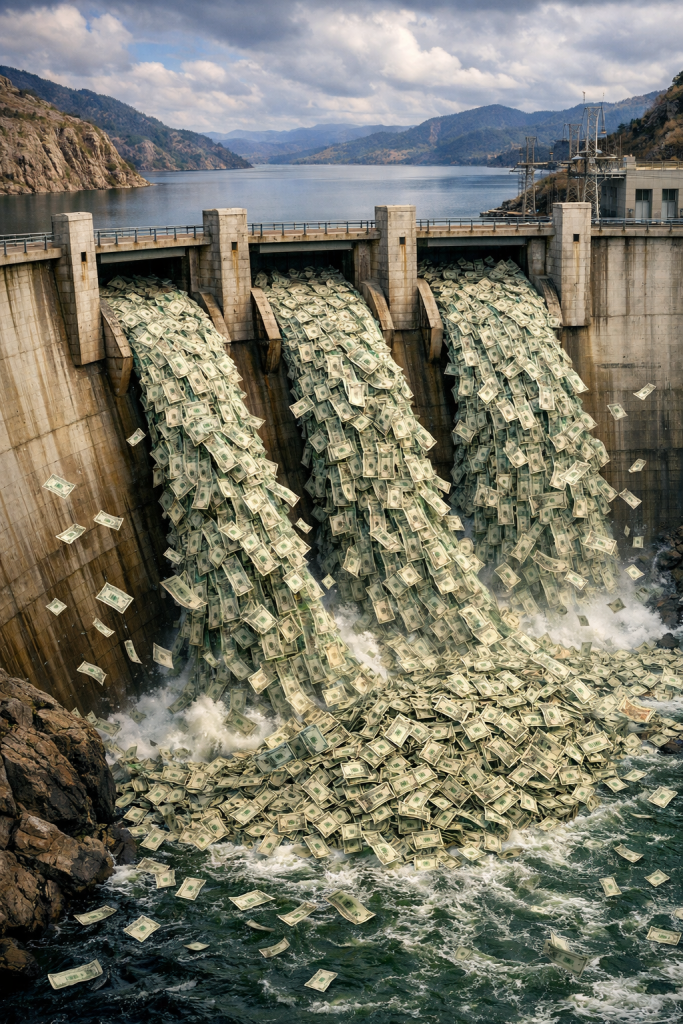
Read that again. The people contracted to sell the water are saying the water is too expensive to use. For irrigation. Which is what the dam was built for.
This is not a minor administrative wrinkle. This is the load-bearing wall of the entire business case, and it has cracked through.
Economist Peter Fraser said at the time of the $82 million budget that this would be the most expensive irrigation scheme in the country. That was at $82 million. The dam ended up costing in excess of $200 million. Whatever metric Fraser was applying at the original price, it has only moved one direction since.
The document is careful with its language, as these documents always are. It refers to a “circa $130 million cost overrun, largely driven by the Covid pandemic and geological issues.” I’ve been writing about this dam since before Covid was a word anyone knew. The problems — the missing contingency, the optimistic share uptake projections, the as-good-as-fixed-price assurances that turned out to be nothing of the sort — were baked in long before a single lockdown. Covid is a convenient peg to hang the overruns on. It was a significant factor. It was not the whole story, and presenting it as such does the community a disservice. I was raising concerns in council chambers years earlier and being told to trust the process. We trusted the process. Here is where the process got us.
The contract WIL signed to sell the extra shares is now effectively a dead letter as they announce that they are expecting to break their contract (not surprising with a sales pitch like “the water is too expensive to irrigate with”). The NRDA document acknowledges that “increased water charges, the eroding of potential irrigable land, and the prevailing economic conditions means the required sale of new water shares is no longer realistic.” The demand for water that was supposed to justify the scale of this project is not growing. It is shrinking.
The document is frank about what comes next if nothing changes. The large shareholders in Waimea Irrigators Limited are, in the NRDA’s own words, “under financial pressure” and WIL is “at real risk of high levels of payment default from its shareholders.” When a company’s biggest customers cannot pay, the company does not survive. If WIL collapses, the ratepayer does not walk away. The ratepayer is the last man standing, holding in excess of $200 million in debt.
To accommodate “seven staged refinancings as costs increased,” the financial structure of this dam now runs across more than 20 separate financial mechanisms. Some of those need refinancing as early as 2033. The ask of Government is either to renegotiate the Crown Infrastructure Investing Limited loans, or to conduct a complete review of the entire financial stack and the Waimea Water Limited entity from the ground up. They call this an “intergenerational solution.” The same word — intergenerational — was used to sell this project to the community. What was promised as an intergenerational asset is now an intergenerational liability. It will take generations to sort this out. That much, at least, has proven accurate.
The NRDA document dresses this up in the language of partnership and economic resilience. What it is, stripped back, is a formal notification to Government ministers that the financial architecture of the largest dam built in New Zealand since the Clyde Dam is in distress, the people who were supposed to pay for it cannot, and the bill is coming back to the public.
We were told this would not happen. We were told the risk was managed. The people who said otherwise were told to sit down. The dam was opened in February 2025 to considerable fanfare. It is now, five months later, the subject of a ministerial briefing asking for a bailout.
I have been told more than once to stop writing about the dam. Had a conversation with a former mayor about it. Water under the bridge, as it were. But here we are, with a regional economic development agency formally briefing government ministers on the financial distress of an infrastructure project that was sold to this community on figures that turned out to be wrong, with a governance structure that is now acknowledged to need wholesale review, funded through a mechanism so complicated it took seven refinancings and more than twenty instruments to hold together. All of it, now, someone else’s problem to fix.
The NRDA is a capable organisation doing important work for this region. But on this page of this document, what we are reading is the formal acknowledgement that the people who said this would work were wrong, the people who raised concerns were right, and the tab is still running.
It is time for a full and public accounting of how we got here — not just for the purposes of this Government briefing, but for the community that was asked to trust the process.