TDC Me

Your Say

Together we can achieve more

  • Home
  • Inclusive Council
  • Environment
  • Water
  • Housing
  • Business
  • Transport
  • Dam
  • Contact
  • About
    • Testimonials

The Science Was Settled. Until It Wasn’t.

19/05/2026

climate change, the science is settled

Here is a sentence that should have made the front page of every newspaper in the Western world last month. It did not.
climate change, the science is settled
The Science is Settled

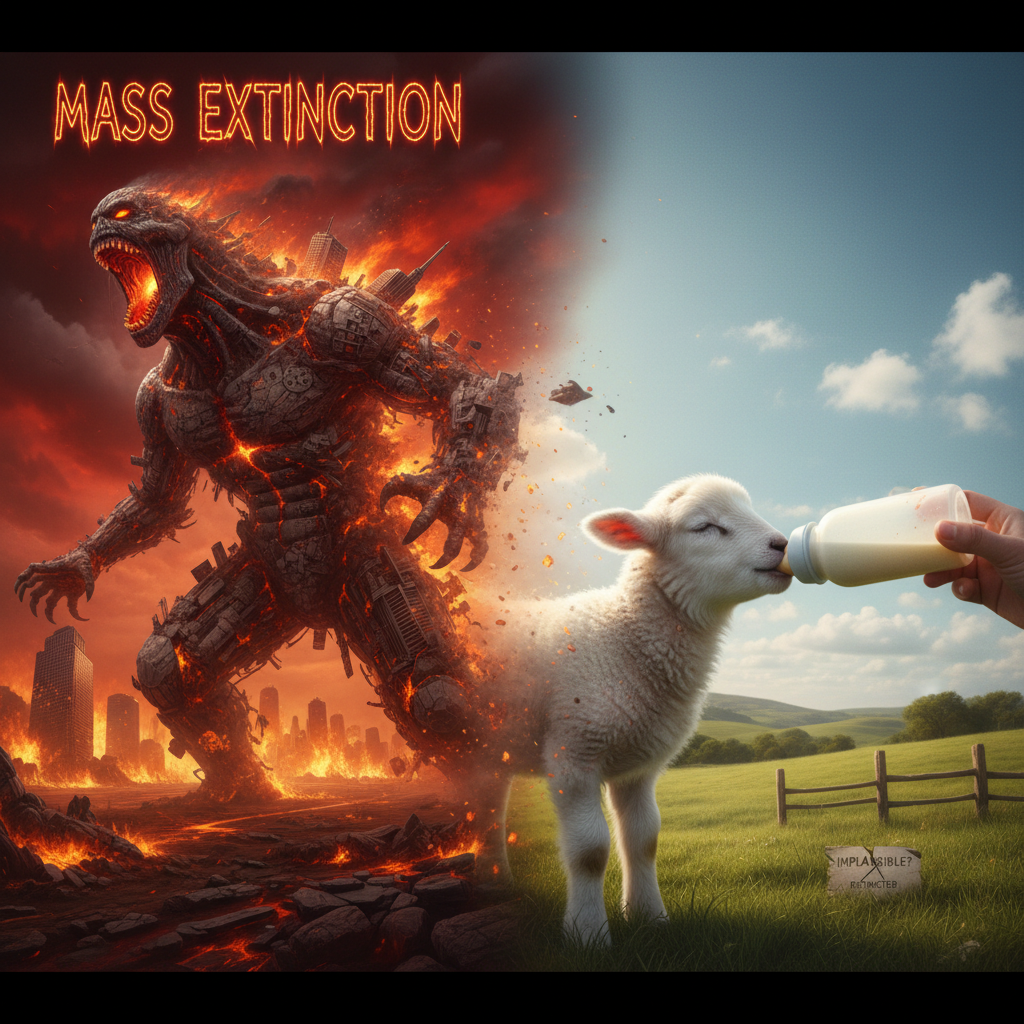
Scientists writing in the journal Geoscientific Model Development formally declared that the IPCC’s headline worst-case climate scenario — the one projecting 4 to 5 degrees of warming by 2100, the one that underpinned a generation of extinction predictions, net-zero urgency, and a significant portion of the economic restructuring of the developed world — is “implausible.”

Not revised. Not updated in light of new data. Implausible. Their word, not mine.

The scenario in question is called RCP8.5. If you have read anything about climate change in the last 15 years — and you have — you have been consuming its outputs. The melting glaciers, the crop failures, the catastrophic sea level rises, the species extinction modelling, the Davos briefings, the school strikes. All of it was anchored, to some degree, in a model that assumed coal consumption would increase roughly sixfold by 2100. A model that critics — actual scientists, not bloggers — have been calling implausible since at least 2019. A model that the World Economic Forum was still using as recently as 2020 to show audiences what “more than 4°C of warming” would do to the planet.

It is now officially dead. Euronews reported this morning that the new worst-case ceiling has been cut by a full degree Celsius.

Positive revision, apparently.


Now, Donald Trump. I am going to ask you to set aside whatever you feel about the man for the next two minutes, because the truth does not care about your feelings toward the messenger.

On Saturday he posted this on Truth Social:

“GOOD RIDDANCE! After 15 years of Dumocrats promising that ‘Climate Change’ is going to destroy the Planet, the United Nations TOP Climate Committee just admitted that its own projections (RCP8.5) were WRONG! WRONG! WRONG!”

He is not wrong. The spelling is creative, the caps lock is doing considerable work, and the political framing is nakedly self-serving. But the underlying claim — that the IPCC’s flagship doomsday scenario has been admitted to be wrong — is factually accurate. Unusually for him, he was also early. He has been saying this since before it became institutionally acceptable to say it.

The people now scrambling to contextualise the revision have landed on a story: we updated the models because renewables got cheaper and emissions are tracking below the worst-case. In other words, the policy worked. Science in motion. Nothing to see here.

This explanation deserves a little scrutiny. The RCP8.5 scenario was never described as a policy-failure scenario. It was described as “business as usual.” It was the baseline. What happens if we do nothing. Roger Pielke Jr., a climate scientist who votes Democrat and has been making this specific argument since 2019 — and who has been dismissed and attacked for making it — wrote this week that RCP8.5 is now officially dead. He has been right about this for years. He was not thanked for it.

The idea that the revision is a clean success story for climate policy requires you to believe that coal consumption was always on track to increase sixfold, and only heroic intervention stopped it. The alternative explanation — that the scenario was always a stress test dressed up as a projection, used to generate urgency that the actual science did not quite support — is not one you will find prominently featured in the coverage.

The science is settled, climate change is real and we are all going to die. Familiar positions taken from around the council table. It is costing you hundreds of thousands as a rate payer to fight the impending doom – that apparently isn’t.


Here in New Zealand, this matters. We restructured agricultural emissions policy around urgency derived in significant part from these projections. We told farmers they were going to cook the planet. We built an Emissions Trading Scheme, set methane targets, and began a legal and economic overhaul of the primary sector on a timeline calibrated to scenarios the IPCC has now formally walked back. Some of that policy may well have been worth doing regardless. But the urgency — the you-have-no-choice-and-no-time framing that shut down debate — was borrowed from models that were, to use the technical term, implausible.

It is worth asking who decided that was an acceptable way to run public policy. And it is worth asking what other assumptions, baked into the modelling that shaped a decade of New Zealand legislation, are similarly due for a quiet revision.

To be precise about what I am not saying: I am not saying climate change is not real, or that warming is not happening, or that doing nothing is a sensible policy. The IPCC still projects meaningful warming under its revised scenarios. The risks are real and the direction of travel is not good. What I am saying is that there is a meaningful difference between “we face a serious challenge that requires considered policy responses” and “we face extinction and anyone who questions the models is a denier.” The first is defensible. The second was never fully supported by the science, and the institutions responsible for the second owe the public a more honest accounting than a quietly updated journal paper.

Trump said “WRONG! WRONG! WRONG!” He is not the messenger anyone would have chosen. But on this occasion, he is pointing at something real.

The least the institutions involved could do is say so directly, in plain language, without the journal paywall.

  • Read the Geoscientific Model Development paper here.
  • Trump’s full statement via Climate Depot.
  • WEF’s 2020 worst-case scenario briefing.
  • Roger Pielke Jr. on RCP8.5 being officially dead.

Filed Under: Environment, Spending Tagged With: climate change, global warming, science is settled

Tasman Environment

12/08/2019

Tasman environment and climate change

ENVIRONMENT

Tasman is world renown for our stunning landscapes, but we need to encourage smarter use of our environment for a sustainable future so that generations to come can also enjoy the Tasman experience. We all need to step up including Farming, Business, Tourism, and Residential households in the products we use, the way we treat our natural resources, and the flora and fauna we share the planet with.

Tasman environment and climate change

Are you ready to see change in Tasman?

Would you like to see us protect our rapidly disappearing variety of life? Tasman is home to a number of species on the endangered, and critically endangered species list. We can act now save them or we let them slide into extinction.

It sounds like an obvious choice, but it may require taking action that restricts our “rights” as Kiwis. We may have to give up our right to racing along beaches in vehicles or taking our dogs to beaches and letting them roam free. We may have to give up our right to camp anywhere we like whenever we like.

What are the benefits, apart from saving a few birds and bugs or some plants we don’t know the name of anyway?

Tasman is one of the few regions in New Zealand with significant environments of interest that does not capitalize on this opportunity. We have national parks and we have freedom campers. We do not promote Kiwis (the bird) like Rotorua, or Whales like Kaikoura, or Penguins like Oamaru, or the Gannets of Cape Kidnappers. But why don’t we?

Eco-tourism is far more lucrative than allowing freedom camping. The money generated from eco-tourism not only creates work opportunities, it also allows for more work to be done to protect and enhance our endangered species. Is that worth a conversation about maybe giving up some of our “rights”? 

STATE OF CLIMATE EMERGENCY

I do not believe making declarations of emergency is as effective as implementing a strategy of improving how we live. We can do better and we need to do better. Let’s just work together and get it done.

Why, I don’t support a state of emergency.

  1. I absolutely support spending money to reduce our waste to landfill and to protect our endangered flora and fauna. I do not support the generation of endless reports costing huge amounts of money that would be better spent making an actual difference in building a sustainable future.
  2. I do not support the use of emergency in this context. In 2006 Al Gore said we would reach “the point of no return” by 2016 labelling it a “true planetary emergency.”  We have missed the boat according to Al.
    If we keep calling labelling things an emergency that are decades away then what do we call an imminent emergency? It is like all the hi-viz and orange cones on a work site nowadays it all becomes background noise, or like the little boy who cried wolf.
  3. There is also the fact that a “state of emergency” gives the Government of the ability to step in and take control. They may exercise full military lockdown or evacuation (like Wakefield during the recent fire state of emergency) and sequestration of whatever resources and supplies they deem necessary. Be careful what you wish for.
  4. We have soaring rates of youth suicide and one of the reasons quoted is this feeling of despair that we are all doomed. I do not support treating our youth as political pawns to the point they are taking their own lives in despair. When I was a teenager there was the threat of peak oil and then the imminent threat of nuclear holocaust being thrust upon us, fortunately, there wasn’t the internet compounding the issue back then.

What can we do then?

While it is easy to blame agriculture, forestry and other land use for greenhouse gas emissions. And they may be responsible for 23 percent of global greenhouse gas emissions according to the recent IPCC survey.

But food waste is also a major culprit, according to a new report from the Intergovernmental Panel on Climate Change (IPCC).

From 2010-2016, global food loss and waste contributed 8-10 percent of total anthropogenic GHG emissions and currently 25-30 percent of total food produced is lost or wasted, says the  IPCC report on climate change and land. 

This is something that we all can do to immediately affect the amount of emissions adding to climate change. It doesn’t require more reports and endless debates at huge expense. Don’t reinvent wheel just take action.

Join other voters for a practical response to Climate Change and Environmental Issues this election.

Filed Under: Environment, Resources Tagged With: Dean McNamara, Tasman environment

Introducing Dean

Dean McNamara Husband, father, and a fourth generation local from rural Tasman. No longer acting as your voice on the Tasman District Council (TDC). More about me.

Email Newsletter

Sign up to be informed of important news and upcoming events

Make your voice count

Testimonials

Fantastic Speech

It was great to have your involvement in the dawn blessing of the Mapua Sculpture at the beginning of March. Thank you for the fantastic speech which encapsulated the essence of what the Sculpture Project is all about.

Janet Taylor
Ruby Coast Initiative Trust

You Rock

[Thankyou] for standing up for democracy & the people you represent. In the words of a younger generation “You Rock”!

Beth McCarthy
Takaka

keep sticking it to them

What a great pity there aren’t more councilors like yourself, who stand for council on behalf of the voters, and who remain steadfast in their commitment to being voter representatives and not council mouthpieces

Gary Thorpe
Read more testimonials
  • Testimonial Submission Form

Councillor McNamara: As Reported In The News

  • Latest News
    • Yet Another Unbudgeted Spend
    • Dam Tax Bites Little Guys
    • Freedom Camping Waste
    • No Support For Dam Report
    • Developing Within Boxes
    • Grandstand Funding Folly
    • Population Projections
    • Recycling Lunacy
    • Another Dam Blow Out
    • Councillors Not Qualified Directors
    • Mapua Boat Ramp
    • Pokies Sinking Lid Policy
    • No More Mayoral Casting Vote
    • Votes By Ward
    • Returning as Councillor
  • News From Last Term
    • Signing Off
    • Waste (of) money
    • Port Tarakohe
    • Free Charging Not Free
    • Re Election Candidates
    • NZTA Priorities
    • Mapua Upgrade Begins
    • Another vote Uturn
    • Traffic Woes Government Nos
    • Consult Fairy Tales
    • Capital Stop-Works
    • Kempthorne Quits
    • 20 million not a significant change
    • Over paid Councillor
    • Dam Train Wreck
    • Death Vote For Dam
    • Dam Scarce Water
    • Barbershop Gossip
    • Dam budget blowout
    • Dam Secrets
    • Wakefield Water Supply
    • Kempthorne Casting Votes
    • Mapua Gateway Sculpture
    • Mayor Spends Up Again
    • Mayor has a talk
    • Alleged Propaganda
    • Dam Affodability Questioned
    • Dam Funding Questions
    • Dam Questions
    • Storm Water Priorities
    • Knitting up a storm
    • Old guard take on new committee roles at Tasman District Council

Archives

Share the joy

Why Vote McNamara?

I am MOTIVATED.
I have business EXPERIENCE.
I am fiscally FRUGAL (some say tight!).
I am a born and bred LOCAL - here to stay
I am CONTACTABLE - reach me through this website.
I know together WE CAN DO BETTER.

Tags

budget blowout Campground casting vote cost of the dam council dam budget dam overruns Dean McNamara Debt Dr Mike Joy Easter Trading Environmental cost Evacuation Full Council inconsistencies McKee Memorial Reserve P95 performance Pigeon Valley Fire Pollution rate affordability Rate increase rates Richard Kempthorne Richmond Rivers Ruby Bay rules scaremongering mayor Shane Jones spending stormwater Takaka grandstand Tasman Tasman council elections Tasman District Council tdc TDC propaganda vote Waimea Community Dam Waimea dam waimea irrigators water water bylaw WIL

Copyright © 2026 · TDCME.nz · Powered by Nz Marketing Systems · Log in

This website is authorized by Dean McNamara 22a Edward Street Wakefield